
A roof in Western Pennsylvania takes a beating that roofs in milder places never see. Water works into a seam, freezes overnight, expands, and widens the gap by a fraction. Repeat that through January and February and a small problem becomes a rotten deck. Most of the roofs we replace didn't fail because the shingles wore out. They failed at the flashing, the valleys and the eaves.
We work on asphalt shingle roofs for houses and small commercial buildings, from a single-slope repair to a full tear-off and rebuild. Which one you need is something we'll tell you straight. If your roof has five good years left in it, we'll say so and you can call us in five years.
Roofing services we offer
-
Free roof inspection
A full check of shingles, flashing, valleys, vents and the attic, with photos of anything we find. Catching problems early keeps repairs small.
-
Roof repair
Leaks, missing or wind-lifted shingles, failed pipe boots and worn flashing, fixed properly and matched to the existing roof.
-
Roof replacement
Complete tear-off and a new roof system, from the deck up, with warrantied materials and new flashing throughout.
-
Storm damage and claims
Assessment after wind or hail, photos and measurements for your insurer, and a visit with your adjuster if it helps.
What the job includes
A full replacement covers the whole system, not just the layer you can see:
- Full tear-off — old shingles and underlayment stripped back to bare deck, so nothing rotten gets buried under new material.
- Deck inspection and repair — soft or delaminated sheathing replaced before anything goes back on top of it.
- Ice and water shield — at the eaves, in the valleys and around every penetration, which is precisely where roofs here actually leak.
- Synthetic underlayment — across the whole field, fastened to the manufacturer's pattern rather than to whatever is quickest.
- Architectural shingles — from a manufacturer that stands behind them, with matching starter strip and ridge cap.
- New flashing — at chimneys, walls, vents and skylights. Reusing old flashing is the shortcut that causes the next leak.
- Balanced ventilation — ridge and soffit intake sized together, so the attic isn't cooking the shingles from underneath.
- Magnetic sweep and haul-away — of every nail and scrap before we leave the property.
How the work runs
-
We look at it
We get on the roof where it's safe to, check the attic from underneath, and photograph what we find.
-
You get it in writing
Scope, materials, price and a realistic number of days on site.
-
Protect, then strip
Tarps and plywood over landscaping, gutters and AC units. The old roof comes off in sections so nothing is left open overnight.
-
Rebuild the system
Deck repairs, ice and water shield, underlayment, flashing, shingles, ventilation.
Recent roofing work
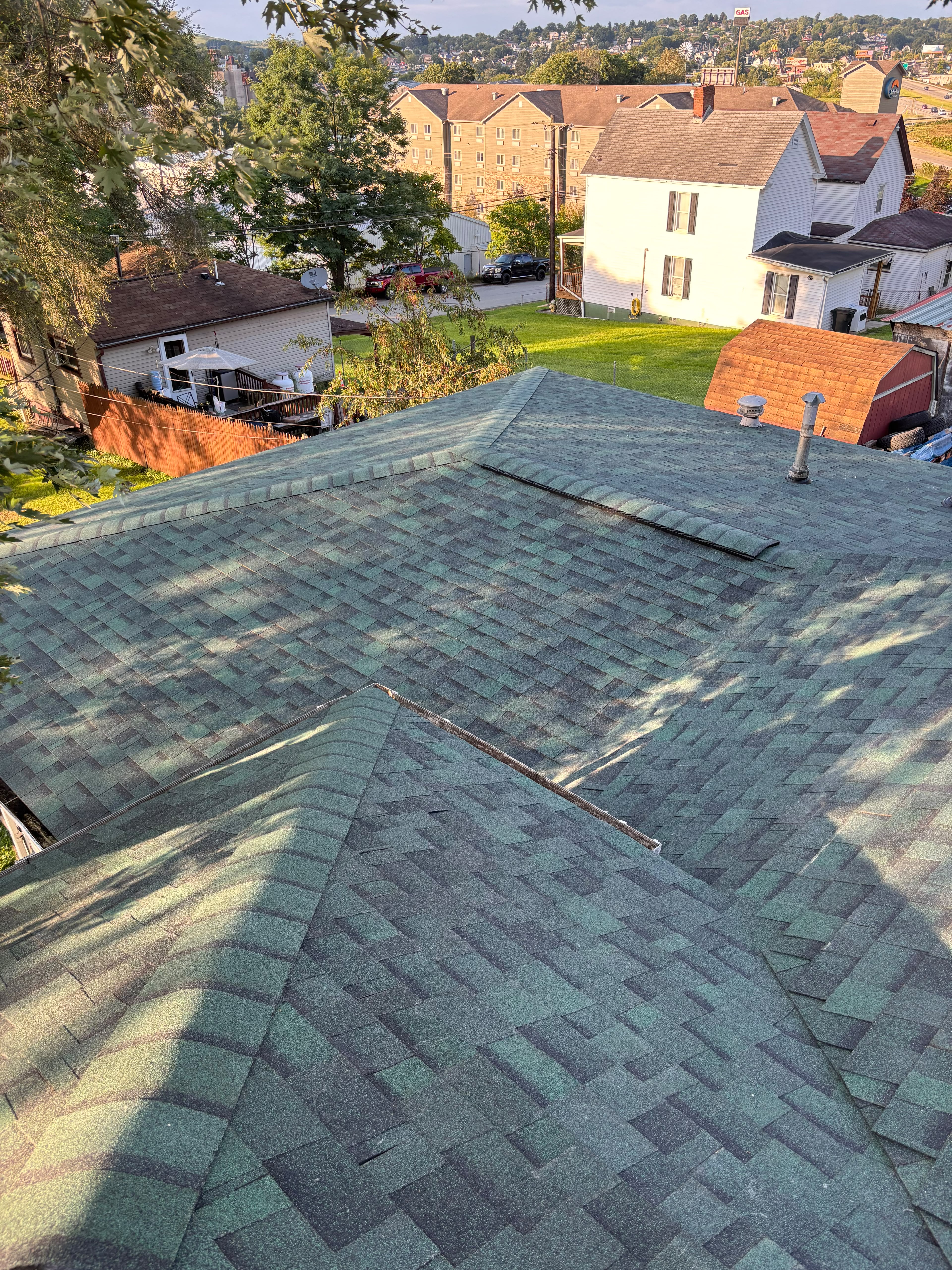
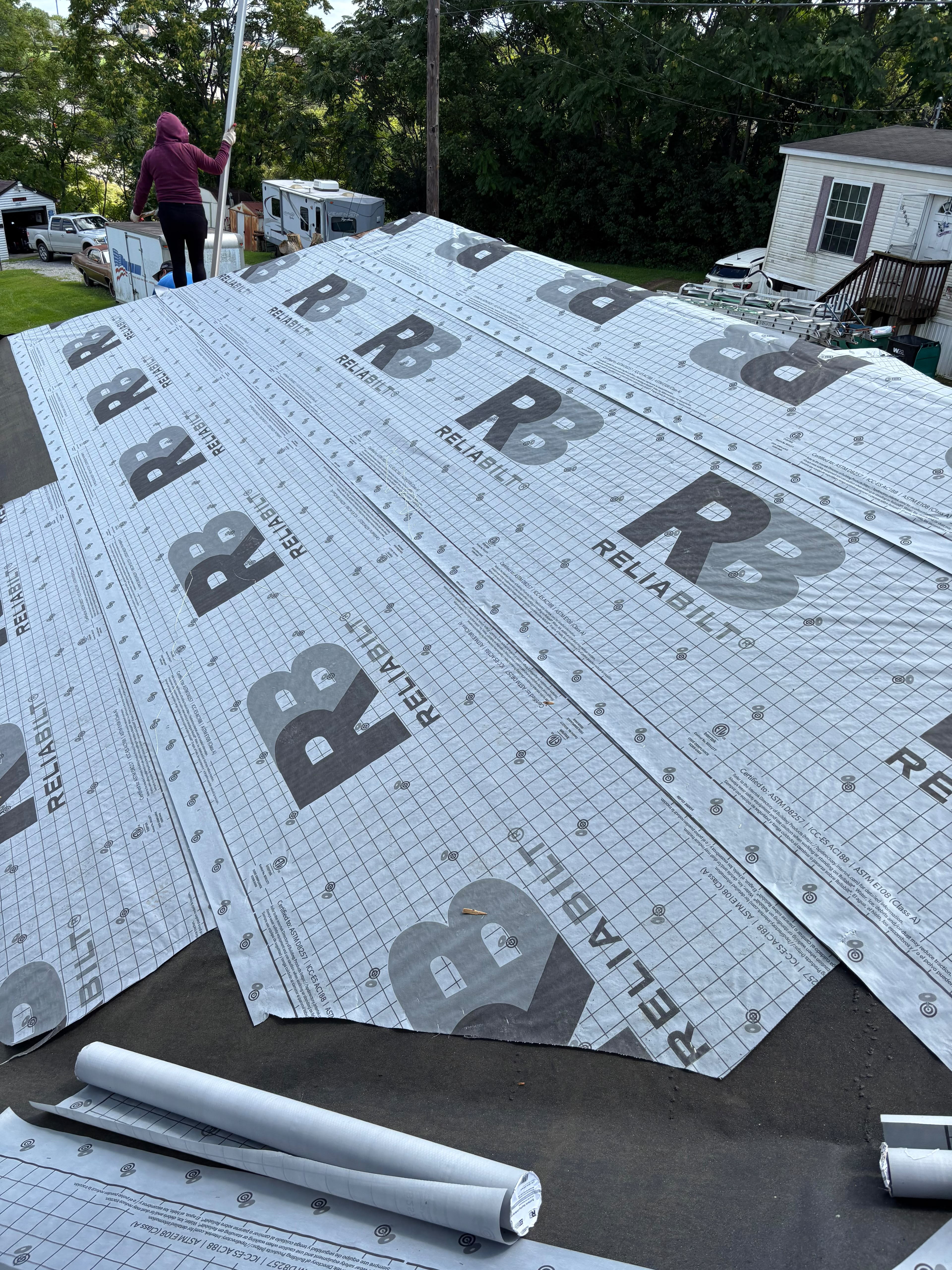
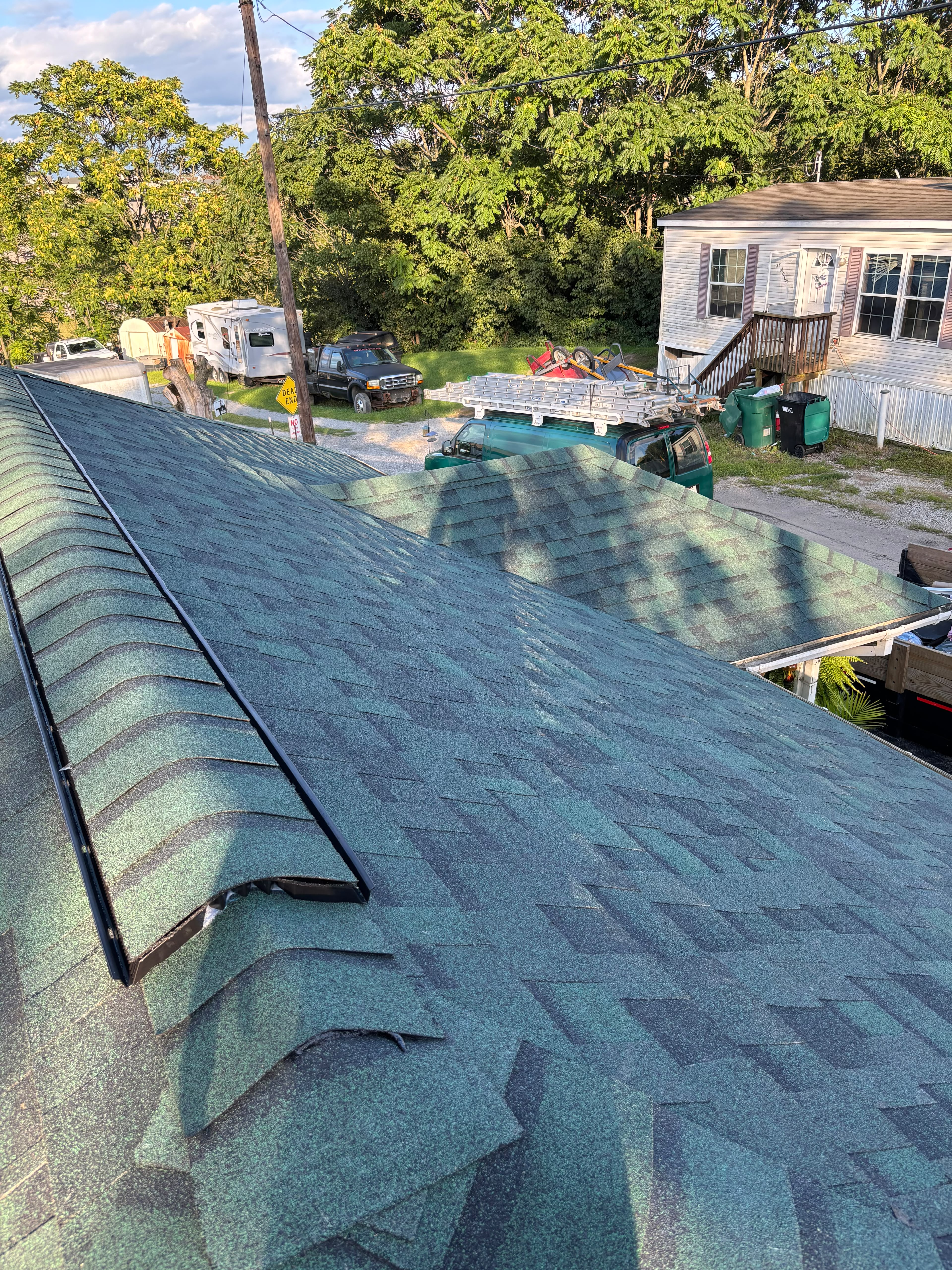
Questions we get asked
Can you repair it instead of replacing it?
Often, yes. Isolated wind damage, a failed pipe boot or one bad valley are repairs, and we'd rather do the repair. What we won't do is patch a roof that's already on its second layer and shedding granules everywhere, because you'd end up paying twice.
How long does a full roof take?
Most single-family houses in the city run one to three days, depending on size, pitch and how many layers are coming off. You get the number before we start, and a message the same day if weather moves it.
Do you work with insurance claims?
We do. After storm damage we document the roof with photographs and measurements you can hand straight to your adjuster, and we'll meet the adjuster on site if that makes the claim go smoother.
What happens to my gutters and landscaping?
Both get covered before the first shingle comes off, and checked again at the end. Gutters full of tear-off grit are the calling card of a crew that stopped caring on the last afternoon.
Free estimate, no pressure
We'll come out, look at the work, and give you a written number. What you do with it is up to you.
 412 286 6071
